Work · Fleet operations / Financial integrations
Yakıt Online
Operational infrastructure at fleet scale.
What it is
Yakıt Online is a fleet fuel operations system for customers of Opet's Otobil programme: backend workflows that ingest fuel data from Opet systems, connect to banking flows, and keep customer accounts correct — with an iPhone and iPad app as the operational endpoint.
Why it needed to exist
Fleet fuel is a financial process, not a report. Purchases, limits and settlements move between a fuel network, banks and thousands of accounts, and every mismatch becomes a support case.
What Idealink did
Idealink built and operates the backend workflows and integrations, supports operational issues across customer accounts on an ongoing basis, and designed, built and published the iOS and iPadOS app.
- Status
- Live
- Relationship
- Client product
- Industry
- Fleet fuel management
- Period
- 2024 — ongoing operation
- Platform
- Backend operations · integrations · iPhone and iPad
- Idealink role
- Backend and integration engineering, operations support, iOS and iPadOS app, release
Thesis
The app is the visible edge. Underneath it, Idealink runs the workflows that move fleet fuel data from Opet's systems through banking flows to thousands of customer accounts — and keeps them correct. This is the operational infrastructure story.
01
The system, end to end
Five layers. The app is the last one.
Opet · fleet data
Purchase and account data from Opet systems for vehicles registered to the Otobil programme.
Idealink backend
Workflows that normalise purchases, limits, vehicles and periods, and reconcile them into customer accounts.
Banking · financial flows
Integration points with banking-related workflows, so limits and settlements reflect what actually happened.
Customer operations
Ongoing correction and support across thousands of customer accounts — the work that keeps the numbers trustworthy.
Mobile surface
An iPhone and iPad app that shows the current limit, purchases, consumption and vehicles. One output of the system, not the product.
02
Operational reliability
Operating the system means owning its exceptions: a purchase that lands late, an account whose limit disagrees with the bank, a vehicle moved between fleets. Idealink handles these as continuous operations, not as tickets that wait for the next release.
The integrations with Opet systems and banking flows are treated as production dependencies with their own failure modes; the workflows are built to reconcile rather than assume.
The mobile app is strictly read-only against that system, which keeps the endpoint simple and the source of truth in one place.
03
What reaches the operator
The app exposes the outcomes of the system in the fewest possible screens.
- Home
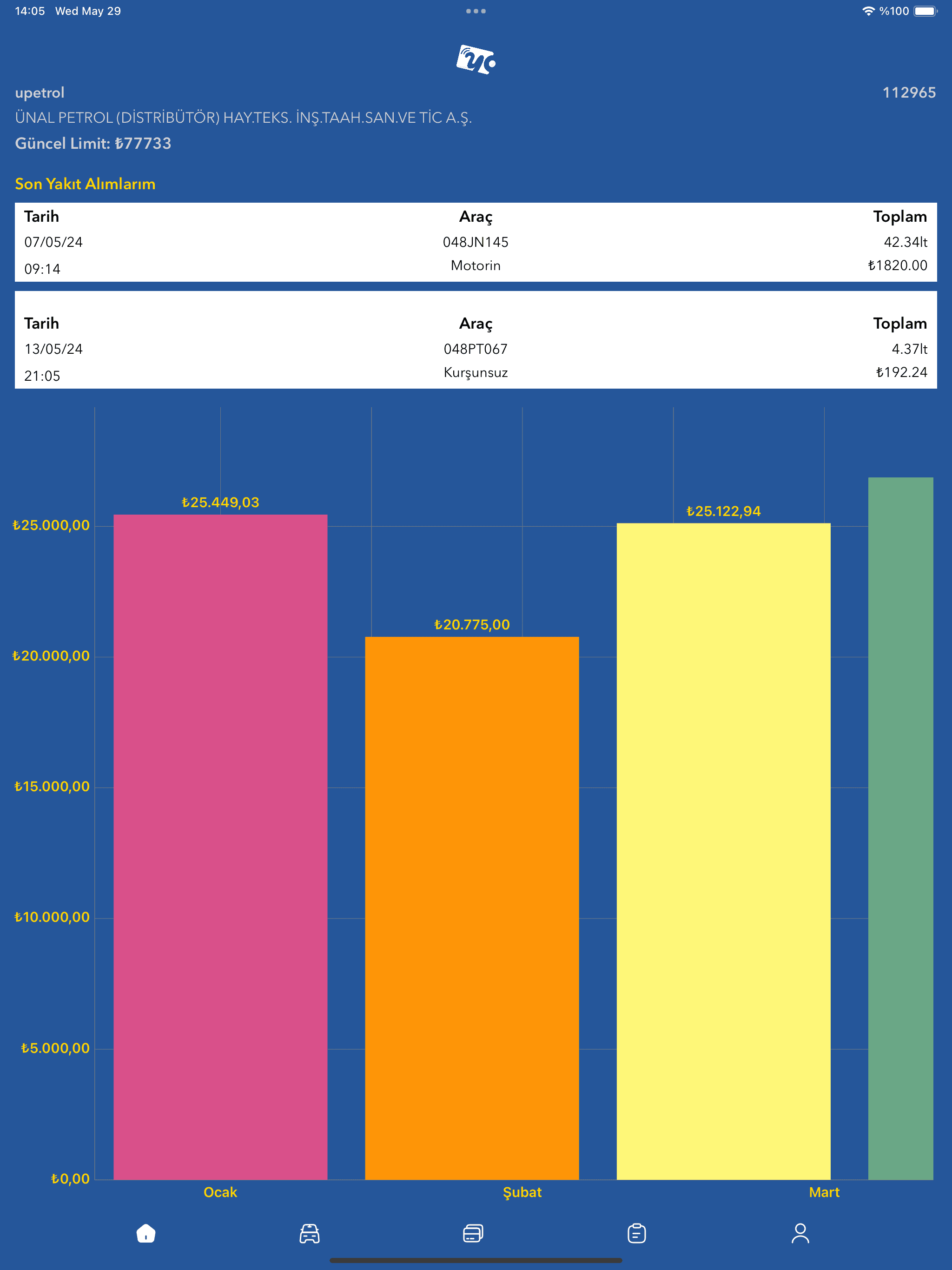
- Current limit, latest purchases, monthly spend chart
- Vehicles
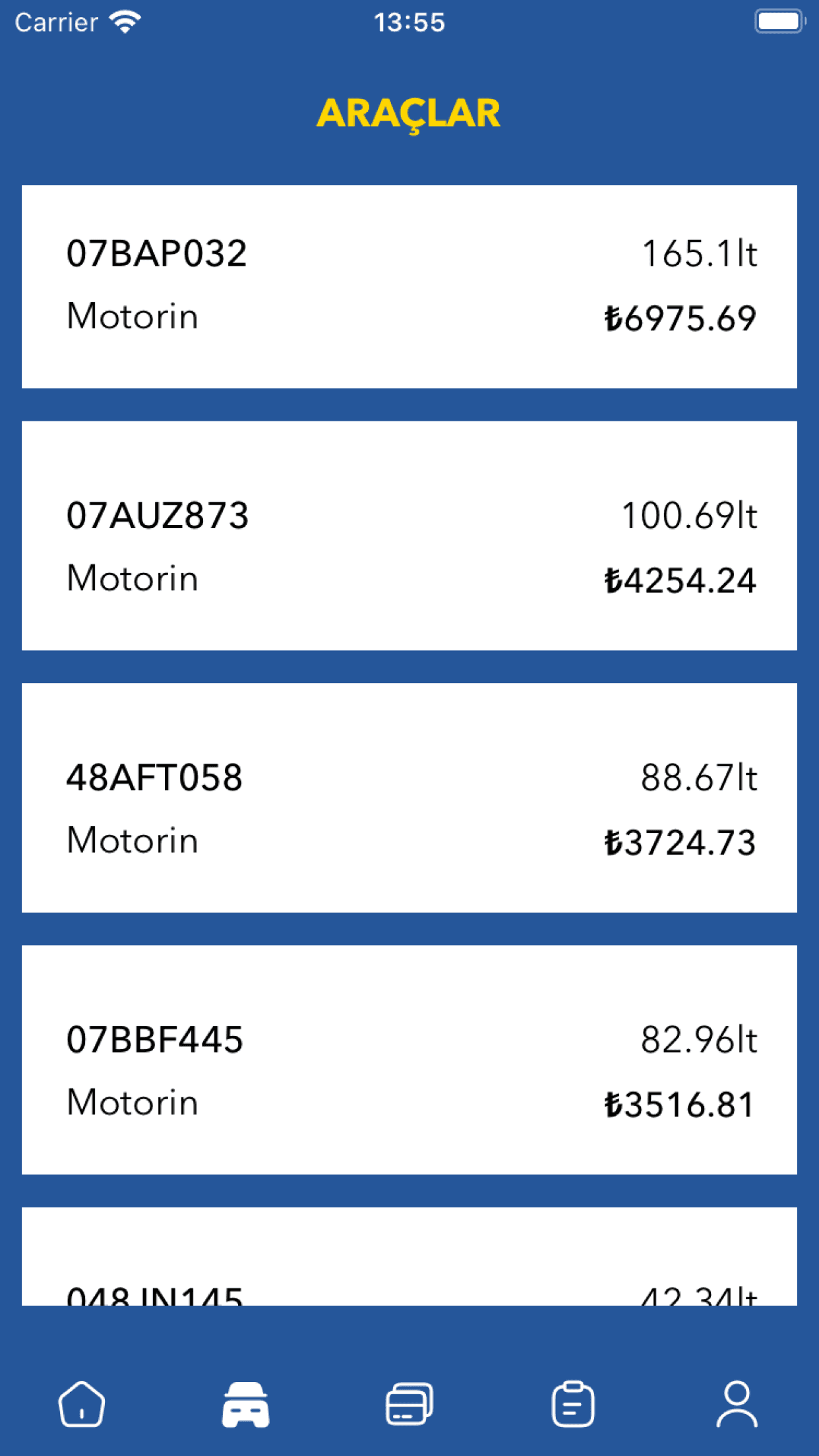
- Every plate with litres and spend
- Consumption
- Date range, purchase count, average price, litres and spend
- Purchases
- Date, time, plate, fuel type, litres, amount
- Devices
- iPhone and iPad; the iPad rebalances around the monthly chart
04
The endpoint, honestly
Current App Store screens. Utilitarian on purpose — a tool used in a cab, not a consumer app. A refreshed interface can replace these without touching the system underneath.
Mobile is an operational endpoint. The product is the system that keeps thousands of accounts correct.
Outcome
Where it stands
Yakıt Online has been in continuous operation since 2024: fuel data from Opet systems, banking-related workflows and customer-account operations run through Idealink's backend, with the iOS and iPad app live on the App Store.
Exact volumes, contractual scope and integration mechanics are deliberately not published.
Stack and capabilities
Only what mattered
- Backend workflows
- Opet systems integration
- Banking-related integrations
- Swift · iPadOS layouts